
The Recipe Table Is Clever. It Still Can't Cook With You.
Babette PepajThere's a recipe format going viral this week, and I'll give it this: it's clever. It's also not new. A tidy little nested table, ingredients down the left, actions across the top, "just made this killer banana bread without going through 10 paragraphs of life story." The internet swooned. But an engineer named Michael Chu built this thing back in 2004 on Cooking for Engineers, and plenty of us in the food world saw it then. It resurfaces every couple of years and everyone rediscovers it like fire. I get the appeal. Your place in the recipe is a spot on a grid instead of a sentence you keep losing with batter on your hands. Genuinely smart.
The timing's funny for me, because BakeSpace turns twenty this year. We launched August 22, 2006, back when "food social network" made investors tilt their heads, and we've watched every format roll through since. The essay era, the screenshot recipe, the TikTok you pause forty times, the printable card, and now the engineering table having its moment eighteen years late. Every one of them was somebody chasing the same ache: I just want to make the thing, and I want it to come out right. The format keeps changing because the format was never the point. Turns out the answer was never a better-looking list. It was a better conversation.
And yet look closely at the banana bread everyone's sharing.

It drops the flour, cocoa, baking soda, and salt into one merged "fold it in" column with everything else. It never tells you to whisk the dry ingredients together first. That one missing move is the whole difference between a tender loaf and a dense, bitter one, because when you fold dry flour and leavening straight into wet batter you overmix and scatter the baking soda unevenly, and you get a sharp metallic pocket in one bite and a flat spot in the next. Blend the dry stuff on its own, fold it in with a light hand, stop the second it disappears. You're welcome! The table can't tell you that. A table only shows you the structure someone chose to put in it, and this one left out the part that makes it work.
That's the thing about the whole "analytical mind, likes to cook" premise. The measurements are perfect and the technique is missing, because cooking was never really about the list. The list is maybe forty percent of it. The rest is the person standing next to you going "no, not yet, okay, now." A table can't lean over your shoulder. Neither can a screenshot, however clean.
But here's what every one of those formats missed. The fix was never a better way to display the recipe. It was having someone to talk to while you cook.
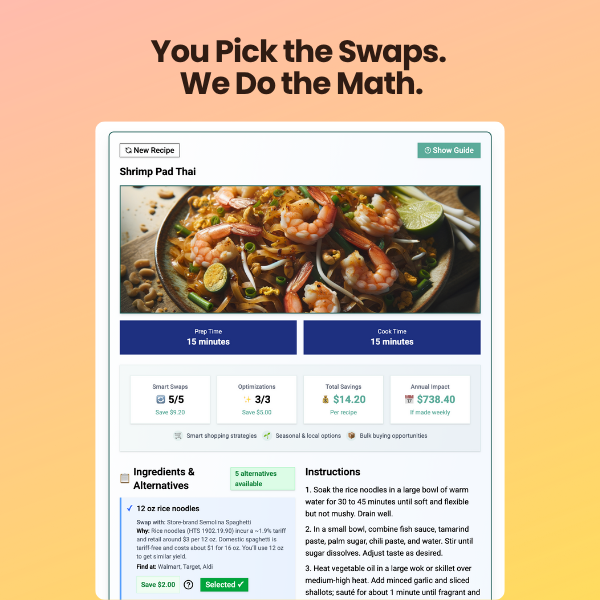
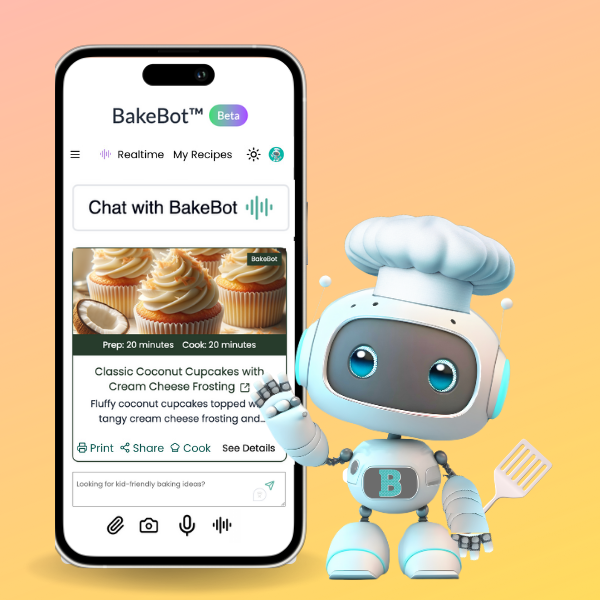
That's what BakeBot.ai is. It's the AI kitchen assistant we built, and it does the thing no table ever could. You talk to it. It walks you through any recipe out loud, at your pace, hands free, so you're not smearing butter across your phone to scroll. It tells you what to get out of the fridge before you start. Ask what a direction actually means when a recipe says "fold" or "cream" and it explains. Tell it you're out of butter and ask what else you can use, and it swaps on the fly instead of leaving you stranded. It works in whatever language you cook in. And it answers the questions no recipe card ever includes, like whether your banana is ripe enough or if a metal pan is fine.
It'll also scan in any recipe you throw at it, a link from a website, a screenshot, a photo of your grandmother's index card, and turn it into something you can actually cook from. It'll even finish a recipe when all you've got is a list of ingredients and no instructions. And because the hard part of cooking is knowing whether you're on track, it tells you what to watch for while it's happening, what the batter should look like, when the consistency's right, how to tell it's done, and what to look out for so you don't miss the moment. Ask it for that banana bread and it tells you to whisk the dry ingredients first, without ever needing to look at the recipe. It knows it the way someone who's made a hundred loaves knows it.
The table is a photograph of cooking. BakeBot is the person in the kitchen with you. (It's built into every recipe on BakeSpace.com too, but BakeBot.ai is where you can bring it anything, from anywhere.)
And that's the whole reason BakeBot exists. Twenty years of running BakeSpace taught me one thing above all: nobody actually cooks from a recipe in silence. They ask questions. They need a word clarified. They wonder if they're doing it right, if it's supposed to look like this, if they can swap the thing they don't have. For two decades I watched home cooks do that in the comments, in the community, out loud in their own kitchens with no one there to answer. BakeBot is the answer finally showing up.
So screenshot the pretty table if you want. Then go to BakeBot.ai, bring it whatever you're making, and actually cook the thing, questions and all, the way it's supposed to come out of the oven.