
BakeBot.ai Turns Grocery Shopping, Cooking and Meal Planning Into a Conversation
Babette PepajShare
Instacart just introduced Clementine, a chatty new AI assistant. You tell it you need a week of cheap kids' lunches or easy high-protein dinners for two, and it hands you a full cart. Snap a photo of the list you scribbled on the back of a school permission slip and it turns that into a cart too. Uber Eats and DoorDash are building their own versions. The tech press is calling this the checkout moving upstream, which is a fancy way of saying the grocery apps finally noticed that dinner starts in your head, not in your cart.
Clementine is a cute name. Adorable, really. But cute isn't going to get dinner on the table, and every one of those conversations ends in the same place, the Place Order button. Anyone who has ever fed a family knows that's roughly where the real work begins. The groceries come home. Somebody has to cook them. Somebody has to figure out what to do on Wednesday when the recipe calls for buttermilk and the carton in the fridge door expired in August (we've all been there, and we all sniffed it anyway).
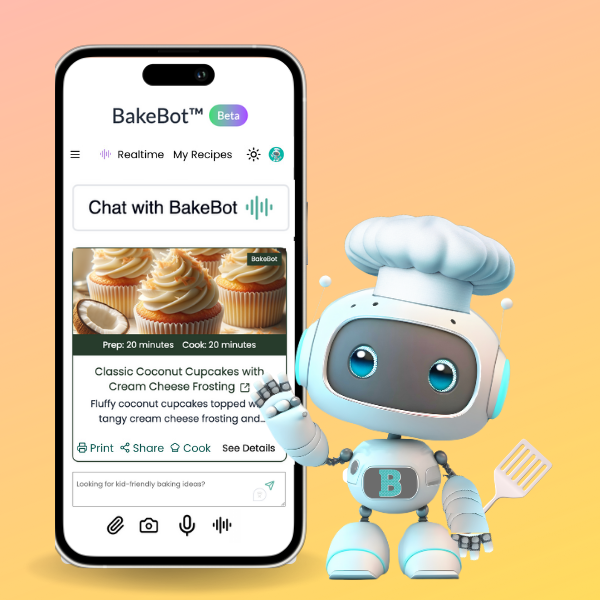
That whole conversation is what we built BakeBot.ai to have. From "what should we eat this week" to "how do I know when the chicken is done," in one place, out loud if you want.
I've been listening to this conversation since 2006
I started BakeSpace twenty years ago so home cooks could swap the recipes they actually make, the ones with a grandmother's name in the title and a butter stain right over the oven temperature. More than 150,000 recipes later, I can tell you exactly how home cooks decide what's for dinner, and it has almost nothing to do with shopping.
People decide based on what's already in the fridge. On who's coming over and what they refuse to eat. On whether it's a Tuesday-after-soccer-practice night or a Sunday-with-the-good-pot night. On a craving, a budget, a memory. The cart is the last step, and honestly the easiest one.
So when we built BakeBot, I didn't want a shopping assistant with a recipe stapled to it. I wanted a kitchen assistant that also happens to be very good at shopping, and I wanted it to know what real home cooks know. BakeBot is powered by the BakeSpace community, twenty years of people who have actually made the thing, burned the thing, and then written in the comments exactly how they fixed it.
What the whole conversation actually sounds like
Sunday night, you tell BakeBot you're feeding four this week, one of them is suddenly vegetarian, and the seven-year-old considers anything green a personal insult. You talk it through, and BakeBot comes back with dinners that work for everybody, adjusted for the vegetarian and sneaky about the green things.
Then you gather the recipes. You can search any recipe on BakeSpace and import it straight into your BakeBot account, or search the web, and either way BakeBot saves just the recipe. No 2,000-word essay about somebody's summer in Tuscany before you get to the ingredients (I say this with love, I have read a lot of those essays). That recipe you screenshotted on TikTok and forgot about, like the other 400 screenshots on your phone? Upload it. A link, a file, a photo of a cookbook page, pasted text, it all comes in. And if your mother-in-law sends her recipe in Spanish, or you want to send yours to her in Spanish, BakeBot speaks that too.
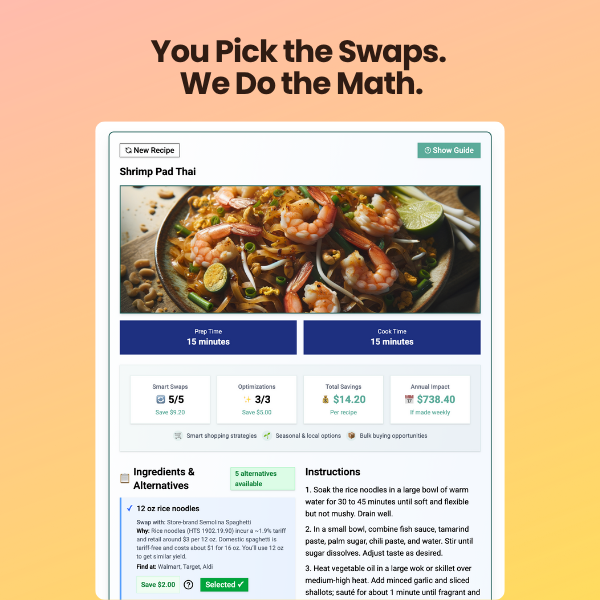
Before you shop, run the week through SmartSwap. Upload any recipe and you watch the savings show up in real time. SmartSwap finds the pricey imports hiding in your ingredients, like the wedge of imported Parmigiano, the Italian tomatoes, and the fancy olive oil with the hand-drawn label, and suggests American-made alternatives. It tells you exactly how much you'll save and which stores have the savings, rewrites the entire recipe around the swaps so the seasoning and ratios still work, and shows you what that dish saves you if it's on your table every week, and what it adds up to over a year. Same flavor, less stress on your budget, and your money stays with American companies. If you'd rather have it delivered, BakeBot will even save your recipe to Instacart so you can add it to your cart. It just doesn't stop there.
Monday, you take BakeBot to the grocery store, and this is where it really shows off. Hold your phone up to the avocados and ask which ones will be ready by Wednesday, and BakeBot looks through your camera and tells you which to grab and which to leave for someone else's bad luck. Same goes for the cantaloupe you've been knocking on like it owes you money. Wander into the international aisle, point your camera at a jar with a label you can't read, and BakeBot translates it, tells you what it is, and explains how people actually cook with it. Then you pass the meat case and the chicken thighs are on sale. Ask BakeBot what you can make with them, and you've got dinner ideas before you reach the checkout line, built around what's already waiting at home.
Wednesday brings the buttermilk situation. You just ask BakeBot. It tells you to stir a squeeze of lemon into regular milk and give it a few minutes, and nobody gets back in the car.
Thursday, you open the fridge and your brain just stops. You point your phone at the shelves, BakeBot spots the half bag of spinach that's about to turn and the leftover rice from Monday, and it suggests a dinner built from what's actually there. That's money you already spent, rescued from the back of the crisper drawer.
Friday, you're ready to cook, and BakeBot talks you through the recipe step by step, out loud, so you never have to look at your phone again (a relief, since your hands are covered in chicken). Honestly, most kitchen conversations are that small. What does it mean to "fold" something? What is fennel, and do I have to? I need this recipe for one person tonight and ten on Saturday. And the question every cook eventually asks, standing over a pan with a spatula: how do I know it's done? You ask, BakeBot answers, and you keep cooking. Every version you make along the way, the vegetarian one, the SmartSwapped one, the one for ten, is saved to your account, so next Friday starts where this one left off.
The part no algorithm can plan for
Twenty years of BakeSpace taught me something that isn't on any product roadmap. Nobody opens a recipe because they want groceries. They open it because their daughter is coming home after her first semester and has been texting about the lemon bars for three weeks. They open it because it's the first Thanksgiving without Grandma, and somebody has to make the stuffing, and the only copy is an index card in handwriting that gets a little harder to read every year.
BakeBot can read that card. It can scale it up for fourteen people, swap the ingredient they stopped making in 1987, and save it so the recipe never again lives on a single piece of paper. It can't bring Grandma back to the table. It can make sure her stuffing gets there.
(It will not, however, tell your uncle his version is better. Some conversations are above its pay grade.)
Whose side is the conversation on?
A cart that builds itself from "cheap lunches for the week" is handy, and plenty of tired parents will use it. It's also worth noticing where that conversation takes place. When the assistant lives inside a store, its answers come from that store's shelves, that store's deals, and that store's brands. Brands have been printing recipes on the backs of boxes to sell us groceries for a hundred years, so that part isn't new. What's new is how much the store learns while it helps. Every cart tells the platform what you buy, how often, and how much you spend, and Instacart's own privacy policy says it may sell or share personal information for targeted advertising. Your grocery list has quietly become somebody's marketing plan.
BakeBot doesn't have a shelf. It has no promotion to run this week and no store brand to move. Its whole job is the food in your fridge, the budget in your head, and the people at your table. When it tells you what to make with the chicken that's on sale, or which store has the better price on the American-made parmesan, it's because you'll save money and your family won't taste the difference. BakeBot just wants to help you make dinner.
Everybody wants a seat in the kitchen now, right at the moment you're deciding what to cook, and I'm glad the question finally gets the attention it deserves. "What's for dinner?" is the most asked question in every home in the country, and for the first time it can talk back. Try it tonight at BakeBot.ai. Tell it what's in your fridge, tell it about the kid who won't eat green things, and then come tell me what it said.