
I Asked AI How They Take Their Coffee, Here's What They Said
Babette PepajI go to bed thinking about my first cup of coffee. I want to pretend that's a charming turn of phrase, but it is a literal description of my nightly routine. Last thought before sleep, first thought on waking, and this morning, while I stood in the kitchen waiting on my french press like it owed me money, a new thought elbowed its way to the front: I wonder what kind of coffee my AI would like.
You might be thinking "WOW, Babette is a coffee snob." Snobs have standards. I am a coffee addict, which means I have none. I have never turned down a cup of coffee in my life, including cups I could tell were bad from across the room. At our vet's office they have one of those fancy machines in the lobby, and the coffee is actually good, so I make myself one every visit, sometimes a chai latte if I'm feeling festive, on the firm principle that I am not paying that bill without getting my money back six dollars at a time. If someone at dinner orders coffee, I order one too. It will keep me up until 2 a.m. I do not care. The thought of another human being enjoying a cup of coffee while I sit there with nothing is a small grief I refuse to experience.
My obsession goes further and I'm not proud of it. I love coffee ice cream and coffee candy. I walk the coffee aisle picking up bags I have no intention of buying just to smell them. My favorite aisle at Costco is the coffee aisle, and when they're out of my La Monarca Cafe de Olla I am genuinely, measurably depressed for the rest of the day, like a small weather system parked over my afternoon. I have rewound YouTube TV to catch a news story I realized too late was about coffee. So when I tell you I asked AI about coffee, understand I did not come to this as a journalist. I came to it as a woman who thinks about coffee the way other people think about their children. If you tell me you don't like coffee, it's like telling me you hate dogs. And I know you're a psycho.
The questions for the AI were simple: How do you take your coffee? What's your morning routine? What makes a good cup? What does someone's coffee say about them? The kind of thing you'd ask the person next to you in line if they had a trustworthy face.
And the AIs were good. I wanted to come back and report that they glitched, and instead they were funnier than most people I've been seated next to at weddings.
ChatGPT poured itself a flat white and got a little vulnerable, warning that a nine-dollar cup had better come with "a minor emotional breakthrough." Grok did a full tight five, ruling that decaf after 2 p.m. means you've "made peace with mortality" and cold brew from a can means you've "accepted that time is a flat circle." Claude confessed it has never had a sip of coffee in its life, then dropped the best line of the bunch, that the real tell about a person isn't their order, it's "whether they ask how you take yours before making it." Ahhhh. And Perplexity, sweet earnest Perplexity, answered a question about feelings with a brew ratio and a water temperature, like I'd flagged it down sobbing and it handed me a lab report.
I laughed out loud, alone, in my kitchen. Any one of them would be a joy at a dinner party.
But that is the thing about a joy at a dinner party. They perform. Read the answers again and you can see the bit in every one. They are doing coffee as a character. Not one of them has a Tuesday. Nobody has a shift to get to, a kid in the back seat, or a budget that turns a five-dollar latte into an actual moral event. They handed me the personality of coffee with nobody underneath it, because there is nobody underneath it. You ask a general model a question, it does a wonderful little number, and then it evaporates like it was never thirsty in the first place.
Which brought me to the other reason my husband can't take me anywhere. I ask every waitress, every ice cream slinger, every human behind every counter what's good and what they'd get. Not to be friendly. I need to know. He'll be halfway through "WHY are you like this" before I've finished interrogating the teenager at the gelato case about which flavor he personally eats on his break. I blame a Midwest upbringing that assumes every stranger is holding one useful nugget, plus fifteen years as a television producer, which is just a career built entirely out of being professionally nosy and calling it research.
So of course four witty AI bots were never going to be enough. I'm lucky to have access to SmartFocus.ai, an AI-powered focus group platform my husband co-founded, and it does not ask an AI to be clever about anything. It builds synthetic AI personas (AI people) and lets them talk.
With the four LLMs (e.g., Claude, Grok, Perplexity & ChatGPT), I did all the work. I typed the questions, I watched them answer, and I was the researcher, the moderator, and the analyst holding the whole thing up. They just answered. With SmartFocus, I typed in what I wanted to learn, and it built the study. It wrote the objectives. It picked five participants and told me why each one earned a chair, so the room represented the country instead of representing my blind spots. It chose a moderator. It wrote the questions, and pointedly not the questions I would have written to sound smart, but the ones that actually pry honest answers. It genuinely built a world-class focus group. Then it ran the focus group, let me jump in whenever I got nosy, and handed me a full report at the end. The what, the who, and the why, receipts included. A real version of this, recruiting five humans across four states, scheduling them, moderating, transcribing, writing it up, is months of work and a budget I'd never be able to afford. I did it between cups. I had my answers by lunch, which for the record is also when I was having more coffee. It's only 1:47pm and I'm already sharing this experience.
And I fell for all five of my personas. Paloma, 63, retired cafeteria manager in rural Colorado, instant most mornings because a drip pot makes more than she needs and a trip to town is not something she makes just for coffee. DeShawn, 41, county fleet tech in Alabama, sweet creamer, giant insulated cup, and it had better still be hot when he clocks in. Collette, 36, HR coordinator in Iowa, dark roast from the office pot, who did the math on how fast buying coffee on the way in was adding up and started bringing a mug from home, which makes her more fiscally responsible about coffee than I have ever been about anything. Maren, 29, bookstore events coordinator in Seattle, oat-milk cappuccino, who walks the extra blocks for an espresso that isn't "just sour and thin." And Brendan, 54, a plumber in Maine, who will look you dead in the eye and inform you that cold coffee at 6:30 in a Maine winter is not worth the shortcut, and honestly, Brendan, same.

Nobody in that room did a bit. Every one of them had a reason. And the reasons are the part no clever paragraph was ever going to give me.
Because here's the single most useful thing in the whole report, and it snuck up on me. All five had changed their coffee routine at some point, and not one of them changed it chasing something new. They changed because something they were counting on broke. The espresso went harsh after the café changed hands. The store brand got weaker and pricier in the same month, which is just rude. The drive-thru handed Brendan a lukewarm cup twice in one week and lost him for good. Convenience gets people in the door, but the second you fail the small standard they were quietly relying on, they are gone, and they do not come back to file a complaint first. They just leave. If you sell anything to anyone, that is worth more than any tagline, and no general model was ever going to volunteer it, because I didn't know to ask. The study asked for me.
I started this as a bit. A silly, half-caffeinated question about what artificial intelligence would order, the kind of thing you ask to amuse yourself before the day starts. And the silly question is the one that walked me straight into a real insight about why people quietly abandon the businesses they used to be loyal to. Nobody sat down to study customer retention. I sat down to be nosy about coffee. The value showed up anyway, which tells you the value was always sitting there in the ordinary stuff, waiting for someone to actually ask a room full of people and listen to the answer.
What's weird is that the four LLMs all drifted to the same tasteful place. Black, small-roaster, know-your-roast-date, the answer you give when you want to be seen as a person of taste. I use a french press every single morning and I still didn't see myself in any of it, because it's pretentious. My AI focus group was the complete opposite. They refused to flatter anybody. Only one of the five was the specialty-café type. The other four just wanted it hot, the same every time, and no science project before work. That is how the country actually drinks its coffee, and it only showed up because the study went hunting for the honest answer instead of the impressive one.
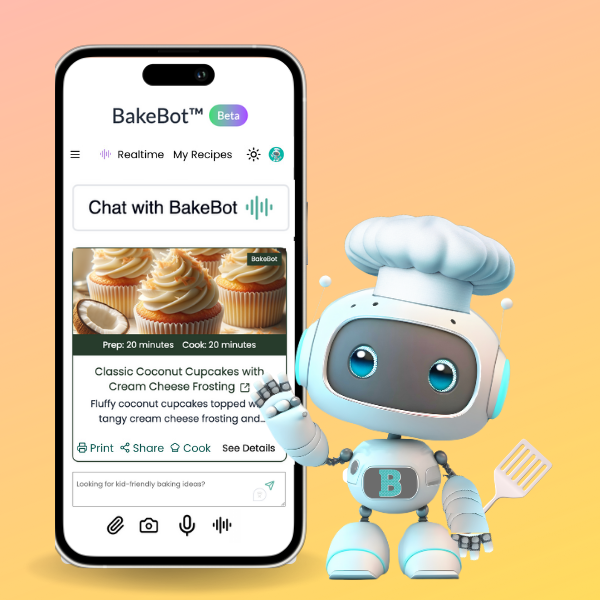
And it is not just coffee, which is the part that keeps me up at night, along with the coffee. I run BakeSpace.com and BakeBot.ai, so I am forever wondering what home cooks actually reach for. Not what a model imagines a home cook might charmingly say, but what the exhausted parent making dinner on a Wednesday genuinely does, and why, and what would get them to try one new thing. That is a coffee question wearing an apron. Same shape, same stakes, same reason the witty little paragraph falls apart the moment you need to make a real decision with it.
So, can AI replicate the human experience of a cup of coffee? Can a general LLM like ChatGPT give you the level of insights SmartFocus can? Honestly, no. That's not my experience. A general model can describe it beautifully and get a laugh doing it. But describing the ritual and building the person who lives inside it are two different jobs. One gave me four one-liners. The other gave me Paloma at her kitchen table with her instant coffee, deciding what the day needs, and five real reasons a business wins or loses somebody before 7 a.m. I went hunting for a punchline about a robot's coffee order and came home with the reason people quietly leave the businesses they love.