
The Recipe on the Back of the Box Was Never Really About Dinner
Babette PepajShare
I've been watching home cooks talk about food for almost twenty years.
When I started BakeSpace back in 2006, I just wanted a place where people could swap the recipes they actually loved -- the ones with a grandmother's name in the title, the ones with a splatter stain on the index card, the ones that came with a story about the Thanksgiving everything went wrong. Almost two decades and 130,000+ recipes later, I've read more "here's how my family really makes it" than just about anyone alive. That's not a brag. It's just a lot of dinners.
So when I tell you I've been thinking hard about how AI is starting to answer the question "what should I make tonight," I'm not coming at it as a tech person who discovered food. I'm coming at it as a food person who's watched how home cooks decide what to cook, change their minds, and find their next favorite recipe -- for twenty years.
And I want to talk about something I'm seeing that I think every home cook should notice. Not because it's scary. Because it's quietly brilliant, and the better you understand it, the better cook -- and shopper -- you'll be.
This is not new. The delivery is.
Let's get one thing straight, because I don't want this to sound like a warning bell. Brands have been using recipes to sell us groceries for over a hundred years, and a lot of it was wonderful.
The recipe on the back of the Bisquick box. The Toll House recipe on the chocolate chip bag -- which, by the way, is the entire reason that brand of chips became a default in American baking. The little recipe card tucked into the Sunday coupon insert. The full-page magazine spread that just happened to call for three products made by the same company that bought the ad. Jell-O practically built a cuisine this way. Campbell's green bean casserole became a national tradition because it sold soup.
None of that was an accident. It was the smartest, warmest kind of marketing ever invented, because it never once felt like marketing. It felt like help. A brand showing you how to use what it makes is genuinely useful. I grew up cooking from those recipes. There's nothing sinister about it.
I say all this so you know I'm not anti-anything. Recipes have always been a path to the grocery cart. That's the oldest trick in the food business, and it's a good one.
What's changed isn't the trick. It's that the path used to be long, and now it's instant.
The old way had gaps. The gaps were where you made choices.
Think about how the back-of-the-box recipe used to actually work in your life.
You saw the recipe. Maybe you tore it out, maybe you filed it, maybe you just remembered it. Then -- days later -- you made a list. You drove to the store. You walked the aisles. And somewhere in there, you made a dozen little decisions. You grabbed the store brand because it was a dollar cheaper. You swapped in the cheese you actually like. You skipped an ingredient because you already had something close. You compared two jars and read the labels. You decided.
All of that deciding happened in the gaps. The gap between seeing the recipe and writing the list. The gap between the list and the store. The gap between the shelf and the cart. Those gaps were full of you -- your taste, your budget, your what's-already-in-the-fridge.
The recipe pointed you toward the store. But you walked the rest of the way yourself.
Now the recipe IS the store, and the gaps are gone.
Here's what I'm watching happen, and I want to describe it plainly because most home cooks haven't had it explained.
You open the grocery app -- or you ask the smart speaker, or the assistant built into the shopping site -- and you say "what's a good dinner for tonight?" or "give me a recipe for lasagna." And in one smooth motion, it hands you a complete recipe and the ingredients are already a cart. Tap to add all. Pickup at 5. Done.
It feels like magic, and in a lot of ways it is. I love that technology is finally this helpful in the kitchen. But look closely at what just happened to all those gaps.
The recipe came pre-chosen. The brands in it came pre-chosen -- which marinara, which ricotta, which box of noodles. You didn't compare two jars. You didn't reach for the store brand to save a dollar. You didn't swap in the cheese you like better. The system made all of those calls before you ever saw them, and it made them fast enough that it didn't feel like calls were being made at all.
And here's the part I really want you to sit with: the system that's choosing those brands works for the store. Not for you. In a retailer's own app, the assistant has every reason to favor the retailer's own private-label products, the brands with the best-structured product data, the items with the highest margin. It's not reading the ad on the endcap. It's reading the product catalog and the price signal. The friendly voice suggesting "this pairs beautifully with a nice mid-range red and a simple green salad" is doing exactly what the back-of-the-box recipe always did -- it's just doing it inside the checkout, with no aisle to walk and no gap left for you to change your mind.
I'm genuinely not mad about this. It's clever. It's the natural next step of something that's been happening for a century. But a hundred years ago you could see the box. You knew Bisquick was selling you Bisquick. Now the selling has dissolved into the helping so completely that you can't always tell where one stops and the other starts.
The question I keep coming back to
After twenty years of listening to home cooks, I've learned that the best ones are always quietly making the recipe their own. They sub, they stretch, they cut corners, they use up the wilting herbs, they cook around the picky kid and the leftover rice and the twenty-five minutes they actually have. That instinct -- to make the meal fit your real life -- is the whole soul of home cooking. It's everything I've watched people do for two decades.
And it lives in the gaps. The exact gaps the checkout-recipe is designed to close.
So the question I want home cooks to carry into their next grocery app session isn't "is this bad?" It's simpler and more useful than that:
Whose dinner is this really for?
Is the answer for you -- standing in your kitchen with half a bag of spinach about to turn, a kid who won't touch anything green, and not much time? Or is it for the cart?
Because those are two different dinners. And only one of them knows what's in your fridge.
What we're trying to do differently with BakeBot
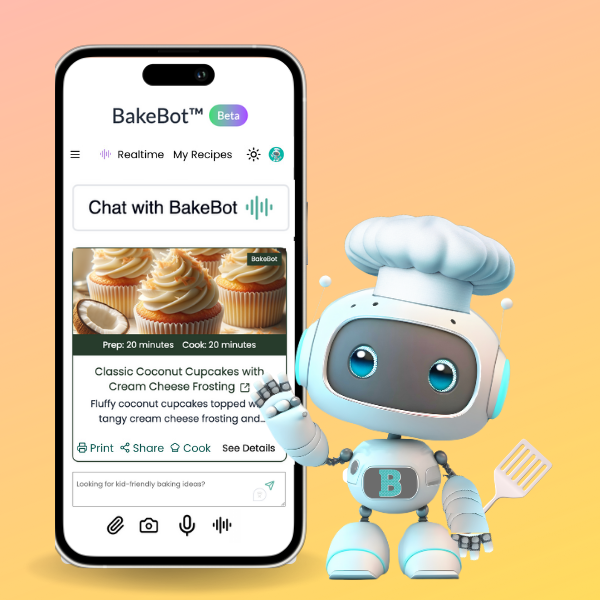
I'll be honest about my stake here. This is exactly why we built BakeBot.
BakeBot is our AI kitchen assistant, and the most important thing about it is ... it's trying to get dinner on the table.
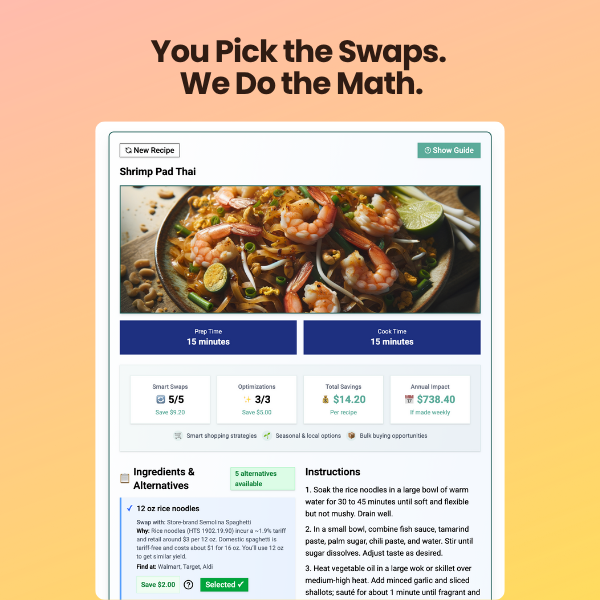
So it starts where a real cook starts -- with what you already have. Point your phone at the open fridge and it works from what's actually in there, including the stuff that's about to go. When a recipe calls for some pricey imported ingredient, our SmartSwap feature finds the cheaper, more available substitute instead of nudging you toward the expensive one. It cooks around your family -- the allergy, the picky eater, the diet someone's on -- and adjusts the one recipe so it works for everybody at the table. And then it stops. It doesn't upsell you a baking dish.
It's the same warm help the back of the box always offered. It's just sitting on your side of the counter instead of the store's.
I think technology in the kitchen can be genuinely wonderful. I've waited almost twenty years for it to get this good. But "good" depends entirely on one question -- the same one I'd ask you to start asking the next time an app hands you a recipe and a cart in the same breath:
Whose dinner is this really for? Make sure the answer is yours.
Babette is the founder of BakeSpace.com and co-founder of BakeBot.ai. She's been building tools and communities for home cooks since 2006.