
The AI stole a recipe developer's grandmother. And honestly? That's not the scandal.
Babette PepajShare
There's a story going around about a professional recipe developer who spent a day cooking with ChatGPT. It helped her fix a cookie. Then it wrote a chicken recipe that referenced her grandmother like it knew her.
She was rightfully unsettled. The internet had feelings. And everyone walked away talking about AI stealing souls. But here's the thing nobody is saying out loud...
Recipes have always been stolen.
Your grandmother's famous lasagna? Someone gave it to her. Who gave it to them? A neighbor. A magazine. A woman in a village whose name nobody remembers. The entire history of cooking is one long game of telephone where nobody asked permission and everybody called it tradition.
The first food blogger who went viral didn't invent bruschetta. The cookbook author who built a career on "simple weeknight dinners" wasn't working from scratch. We have always built on each other. That's not a bug in food culture. That's the whole engine.
So when AI reads twenty years of a recipe developer's work and synthesizes it into something new, I'm not saying that's fine. The credit and compensation conversation is real and it matters. But the outrage about AI "stealing" recipes is coming from an industry that has never, not once, had clean hands on that particular issue.
Here's the part that interests me...
The article features a computational gastronomy researcher who believes cooking can be reduced to molecular compounds, data, and algorithms. And a food philosopher who says a bowl of sushi made by Jiro Ono is fundamentally different from the same bowl made by a machine, even if the rice is identical. They're both right.
And that's the most interesting thing happening in kitchens right now. Because we are at the exact moment where those two ideas have to figure out how to live together.
I've watched home cooks for twenty years running BakeSpace.com. Real ones. Not the ones in focus groups or surveys. The ones who save seventeen versions of the same banana bread recipe and still call their mom before they start. The ones who wing it on a Wednesday and want someone to tell them it's going to be okay. The ones who learned to cook after a divorce, after a diagnosis, after the kids left, after their husband died and they had never once made dinner alone.
Those cooks don't need AI to replace their grandmother.
They need AI to be the friend who says "yes, Greek yogurt works there" at 6:47pm when nobody else is picking up the phone. That's it.
The article ends with the recipe developer looking at a tray of AI-generated beef tacos and saying, as a busy working mum, "these are brilliant." She spent the whole day worried AI was coming for her career. And then at 6pm on a Tuesday it just made dinner for her kids. That moment right there is the entire future of the kitchen compressed into one sentence.
AI is not the author. It's not the grandmother. It's not the memory or the story or the reason you make the same cake every birthday. It is the thing that finally makes the space between "I want to cook" and "I actually cooked" small enough to step over.
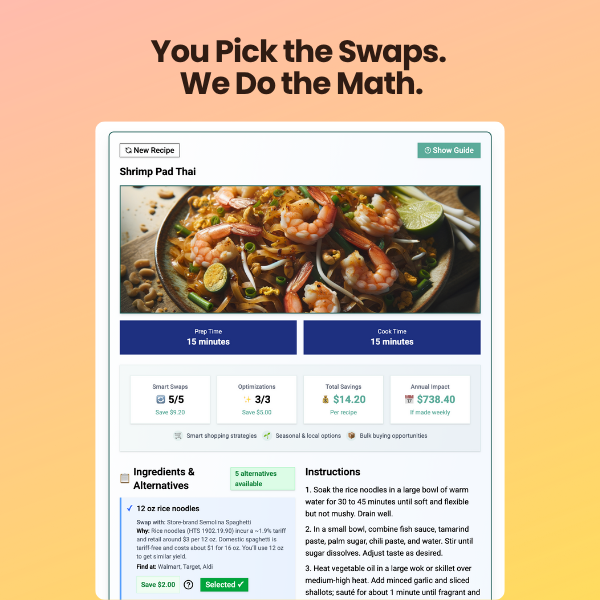
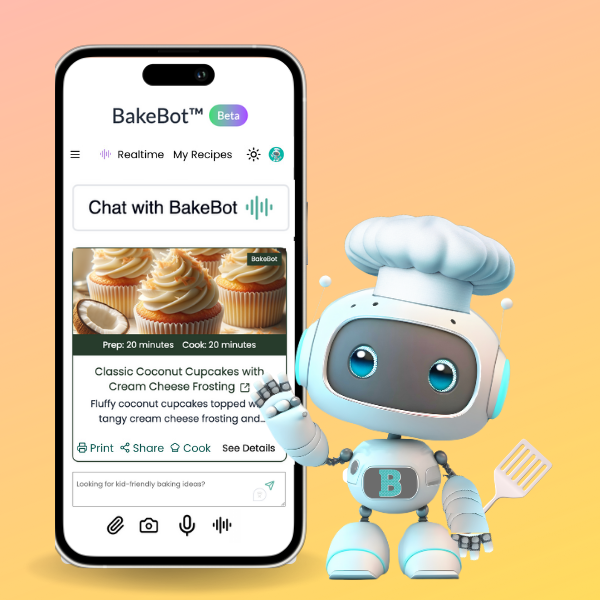
That's what we built BakeBot.ai to do. And BakeSpace has been holding the human side of that story since 2006, because the recipe was never just the recipe.
The kitchen is changing. Not because AI showed up. Because people finally have a tool that meets them where they actually are.
That's not a threat to food culture. That's the most exciting thing that's happened to it in twenty years.
Babette Pepaj is the founder of BakeSpace.com, the first food social network she built in 2006 before "food community" was a category, and co-founder of BakeBot.ai. Twenty years in, she's still obsessed with the same thing: making home cooks feel like they can pull it off.