
NYT Cooking AI Tool Review: How It Compares to BakeBot
Babette PepajBut what I should have called this piece... The New York Times Launched an AI Kitchen Assistant. Then It Apologized.
This is a review of their launch, feature set and community reaction in the NYTs comments section.
There’s a very specific joy in watching someone arrive fashionably late to your idea and announce it with great fanfare. It isn’t revenge, exactly. It’s more like hearing your own joke retold at a dinner party by the guy who didn’t laugh the first time, and getting a big laugh. You don’t interrupt. You just take a chip and enjoy it slowly.
This week NYT Cooking announced it’s adding AI tools that let you customize their recipes. You can tell the chatbot you’re out of spinach, or cooking for twelve, or that your Dutch oven is somewhere in the garage behind the Christmas decorations, and it rewrites the recipe and saves your version to your account. Which is delicious, because our BakeSpace.com and BakeBot.ai have been doing that since 2024.
A Brief History of Everyone Laughing at AI Recipes
First, some respect, because the Gray Lady has earned it. The Times has been printing recipes since the 1850s, which means it was telling Americans how to roast a chicken before most Americans had an oven they could trust. It gave us the plum torte that half the country has made every September for forty years. It turned a newspaper recipe section into the place serious home cooks go to feel like serious home cooks. When the Times says a recipe works, the recipe works. That’s a legacy, and I mean that.
Which is why this next part is so fun.
In 2022, the Times cooked an entire Thanksgiving from "pre ChatGPT" recipes and invited its food team to eat it. The "pre ChatGPT" is really all you need to know. It's the elitist "we were AI-ing before there was AI." So NYT. The food was bad in the very specific way AI food was bad back then, where everything looked right and tasted like a rumor about Thanksgiving. Everyone had a good laugh, food media took a victory lap, and the robots were sent home without leftovers.
So I’m reading this week’s announcement, nodding along, and about a third of the way down it mentions, very casually, the way you mention you’ve been seeing someone, that the Times used AI two years ago to convert its recipes from cups to grams. That’s like finding out your friend who swore off carbs has a sourdough starter in the back of her fridge, and it has a name, and the name is Gerald.
If you’re keeping score at home, the timeline goes like this. In 2022 the Times serves AI turkey and everyone agrees it’s a crime scene. In 2024 the Times quietly hires AI to do the math, but doesn't tell anyone.. Last year the Times lets it double the lasagna and also keeps that a secret. And this week (October 2026) the Times introduces AI to the readers, the way you introduce a boyfriend you’ve been dating for two years to your parents, as if you just met him at the farmers market on Tuesday.
Meanwhile, at BakeSpace
I’ve been building for home cooks since 2006, back when I had to explain what a food social network was to investors who then asked their wives if it was a good investment. (Yes, that did happen.) In 2024 we put our AI kitchen assistant BakeBot on every recipe page on BakeSpace. Same year the Times started quietly using AI. We were apparently doing the exact same thing in parallel, except I put mine on a button where people could see it, and they kept theirs in the back office so no one would see and only they could use it.
I built BakeBot because people on BakeSpace’s Pinterest page kept asking questions in the comments as if the brand page were the actual home cook who shared the recipe, standing right there in their kitchen, ready to help. Can I use frozen? Can I skip the wine? My oven runs hot, now what? Every developer I spoke with said "don't do it. People want reviews and star ratings." People already had star ratings (that's what the New York Times is for). People wanted to know if they could use the chicken thighs already in the fridge, and whether the recipe would still work if those chicken thighs had a little bit of a past. And I knew that. So I developed BakeBot on BakeSpace anyway.
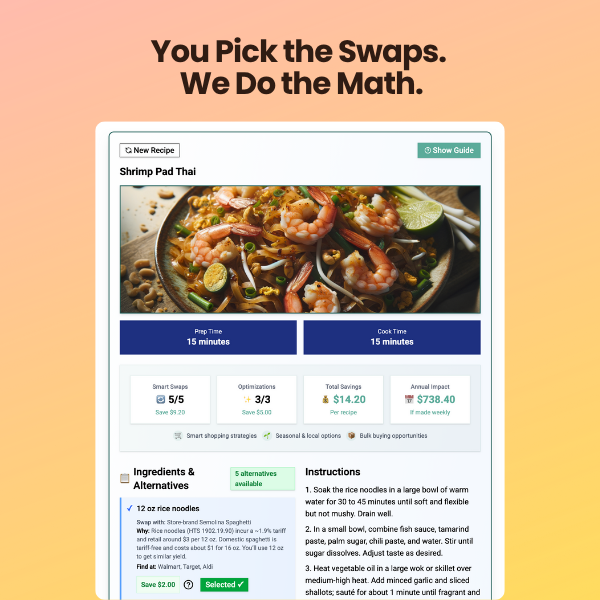
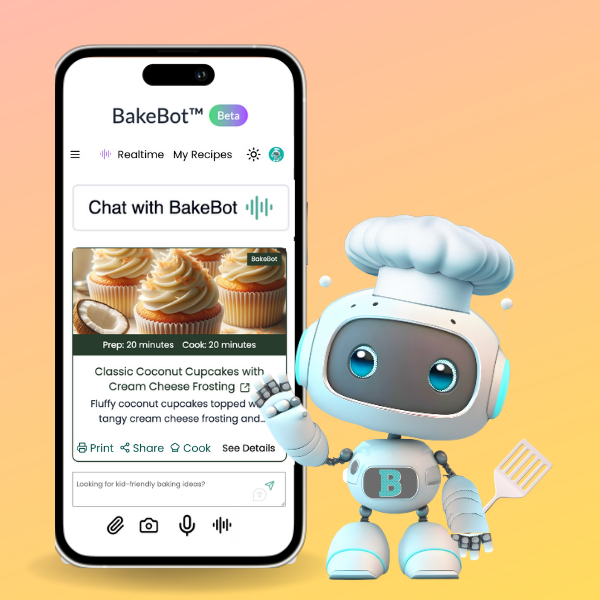
So we started there, with our own recipes, the way the Times is starting now. Then the technology kept getting better and our cooks kept asking for more, so BakeBot got its own home at BakeBot.ai. Because it's easier and faster to to build the latest greatest technology on the latest, greatest tech. BakeSpace was built in 2006 and redesigned in 2018 and 2012 and well, that's like driving a sports car on a dirt road. Now you can prop up your phone and just talk to it while your hands are covered in dough. You can point the camera at your pan and ask if that’s what “golden brown” is supposed to look like, or point it at the produce bin and ask which avocado is actually ready tonight. And because groceries now cost roughly what a used car did in 2006, BakeBot shows you which import tariffs are quietly hiking the price of your favorite recipes, then swaps in alternatives so you get the same taste for less money, and tells you how much you’ll save if you make it every week.
And that’s exactly why the Times says it built theirs. NYT Cooking readers have been asking these same questions in the comments for years, and generous strangers have been answering each other one substitution at a time, a volunteer hotline staffed entirely by people who also want you to know they added more garlic. The new tool just answers back. Food people are the last holdouts on AI, and I say that with love because I am one. A recipe is a promise, and every cook alive has been burned by one, sometimes literally. But with speed AI is moving, and so many tools on the market already, I was surprised to see their feature list or should I say lack of. It feels like they are afraid of their own readers so they are backing into it while also agreeing that AI is well... you'll see!
The Sales Pitch With a Plot Twist
Then I hit the last section of the announcement, titled “Why I’m Still Concerned.” WTF. We’ve just spent several lovely paragraphs on how well it works. There’s a screenshot of braised white beans and spinach with Parmesan, and they look terrific. The chatbot has been tested, trained, and fact-checked by editors. And then, right when you’re reaching for a spoon, we pivot to the environmental impact of.... data centers. Dude. No. Read the room. In a post about substituting kale. It’s a waiter describing the special for five full minutes, the sear, the sauce, the little crispy shallots, and then leaning in to whisper that he personally wouldn’t order it, and by the way, have you thought about the power grid? I think this tells you more about who reads the NYTs than their food section. But when you have to get dinner on the table... I would bet it's the last thing a home cook thinks about.
I mean, come on. Why you gotta play me like that?
Somewhere along the way it became impossible for certain institutions to launch a thing without first apologizing for it. You can’t just give people an easier way to make dinner. You have to give them an easier way to make dinner and a reason to feel bad about it, served together, family style. Imagine buying a KitchenAid stand mixer and finding a pamphlet in the box about the ethics of electricity. How rude. Who exactly is going to feel good tapping that button after you’ve just scared them half to death? You don’t win over the most skeptical cooks in America by agreeing with their fears in the last paragraph. You win them over by getting dinner on the table.
And the Gray Lady, of all institutions, should know this. She has survived world wars, the invention of television, the Atkins diet, and the internet. She does not need to whisper. When the most trusted name in the kitchen launches AI with an apology stapled to it, readers don’t hear caution. They hear permission to panic. Sure enough, the comment section took the cue within hours. The announcement mentioned data centers once, and the readers ran with it like it was the last loaf of challah at the bakery on a Friday afternoon. One gentleman did the math and concluded the Times was destroying the water supply so an editor could skip ten minutes of fifth grade multiplication. Another declared, with real conviction, that AI would not be welcome in her kitchen. When you put the fear on the menu, people order it. I laughed, I cried and I welcomed the NYT to the AI party. F*ck yeah. A good friend and lawyer told me once, "You're no one until someone hates you." So I've never looked at comments like these as truth, but confirmation.
But even with all of this.... they have a point...
The announcement points out that chatbots tend to cheer on every idea you have (no sh*t Sherlock), sometimes with way too many exclamation points, so they trained theirs to tell you when an idea is bad. Yes! Thank you! A kitchen assistant that says “Great idea!” when you want to swap baking soda for baking powder one to one isn’t an assistant, it’s an enabler holding a spatula. A chatbot that tells you your substitution is a mistake is the closest AI has ever come to a real grandmother, and I mean that as the highest compliment available in food. And that's exactly how we trained BakeBot. Duh.
So How Do We Stack Up?
The short version is that theirs works on their 23,000 recipes, which are excellent recipes, I’m not crazy. Ours works on whatever recipe you actually have. The TikTok screenshot that shows four ingredients and somebody’s dog. A photo of your grandmother’s recipe card, the one with the grease stain right where the oven temperature used to be and the sugar measurement rubbed clean off by sixty years of thumbs, and BakeBot fills in what’s missing. And yes, you can bring your favorite NYT recipe right into BakeBot too, so the plum torte can finally meet the tariff report.
Theirs also only lives in the iPhone app for now, which one reader politely pointed out is not where most people want to read a recipe with wet hands. The Times says web, Android and Meta Glasses are on the radar (fancy and $$$$). In the meantime, one helpful reader suggested picking up a second-hand iPad, which is a lot of hardware to halve a cupcake recipe.
BakeBot already works in any browser, on BakeBot (or our web app just go to BakeBot.ai and click on the install button at the top) and on BakeSpace.com (and every recipe a member has created). If you are logged in on BakeSpace, just tell BakeBot to save your modified version to your account. And voila! Theirs saves your modified version privately, and you can’t publish or share it. On BakeSpace or BakeBot, you can share your modified recipe with anyone. Like a real recipe swap.
But there is a silver lining...two things I’m most excited about
The first is that the Times is about to make it impossible not to see the value of AI in cooking. (Thank you so much!) The person who would never in a million years download “an AI app” is going to tap a button on a recipe they already trust, get a dairy-free version for their sister-in-law, and never once think the words artificial intelligence. They’ll just think the recipe got helpful. That’s what actually changes for non-AI people. Not the technology, which has been sitting right there since 2024, including inside the Times, apparently. The permission.
The second is purely selfish, which is that I knew the backlash would be hilarious. I just didn’t expect it to show up before lunch. Within hours, the comments had everything. One of the most popular questions was whether there’s a way to turn the AI off, which is a bit like asking a restaurant to remove the specials board. (The answer, for now, is no, but nobody’s making you order it.) A reader in the UK cheerfully reported that she’s already been running recipes through ChatGPT to convert to metric and cook for one, and a stranger replied that she should just memorize the conversions because her brain would be more efficient in the long run, which is the comment section version of telling someone to walk to work because it’s good cardio. Another reader proudly announced she didn’t need AI, because when she realized halfway through a crumb cake that she’d forgotten the butter, she swapped in canola oil and baked it in a loaf pan instead of muffin tins. Ma’am, that’s a substitution, a pan swap, and a recipe modification. That’s the entire product. You are the AI. And my personal favorite was the reader who skipped the debate and asked whether the tool could finally tell her how big a “small onion” actually is. The editor in chief of NYT Cooking hopped into the comments, asked the tool herself, and reported back: four to five ounces, about a third to a half cup chopped. I’ve been waiting my whole career for that exchange. (BakeBot will tell you too, no editor in chief required.)
And then, buried in all the shouting, a grandmother wrote that she’s as AI skeptical as the next person, but she’d halved a recipe with the tool so she could make cupcakes with her three-year-old granddaughter without stopping to check her math. That’s it. That’s the whole case for AI in the kitchen, and it came from a skeptic with frosting on her hands. The comments will be a war zone for a few more weeks, and then, very quietly, those same people will start using it, because it turns out you can be very, very serious about chicken thighs and still want to know if you can use the ones you’ve got.
There's plenty of room at the table.
For all my teasing, I honestly love it every time a new AI kitchen assistant launches, and I mean that more than any joke in this piece. Every one of them is validation that what we started on BakeSpace in 2024 was the right idea, and every one tells a few million more home cooks that help in the kitchen doesn’t have to come from a cousin on speakerphone. When the New York Times says AI belongs next to the cutting board, even in a whisper, people listen. That’s good for cooks, and frankly, it’s good for us.
I’ve watched this exact cycle with food blogs, with Instagram, and with recipe videos, and the people who rolled their eyes first always end up asking the best questions later. Somewhere this Thanksgiving, a lifelong Times reader is going to be cooking for twenty people with a recipe written for six, and instead of doing fractions on the back of an envelope with flour on their glasses, they’re going to tap a button, and they are going to see a fraction of what AI can do in the kitchen. That makes me a little happy.
So welcome, truly. Be cautious if you like. But don’t be afraid, and please don’t make your readers afraid either.
And if you’re heading into holiday cooking with a turkey that’s bigger than your oven, a recipe card with half the sugar rubbed off, and a guest list that keeps growing, come cook with us, the nicest, friendliest AI kitchen assistant on the market at BakeBot.ai. Bring your grandmother’s stuffing, your TikTok screenshots, even your NYT favorites. This year the robot brings the stuffing, and I hear it’s pretty good. Ask it what the cranberries cost.
For the spreadsheet people, here’s the side-by-side.