
Emily Blunt Does Not Have a Baking Blog: How to Spot a Recipe Site Run Entirely by AI
Babette PepajSomewhere in Morocco, someone is running a baking website starring a busy mom named Elena, who says she wanted to connect with her roots through cake but felt overwhelmed by complicated recipes. Elena has a floral apron, a cozy kitchen, a family smiling around the dinner table, and the face of Emily Blunt. (Emily Blunt, for the record, does not live in Morocco and is not quietly testing sponge cakes between movies.) According to a report released this week by DecryptAds, a startup that tracks the plumbing behind online ads, and covered by Futurism, Elena is one of the bolder characters in a network of more than 2,100 recipe sites that appear to publish AI-generated recipes under AI-generated people. Those recipes then get pushed hard on Pinterest, Facebook and X to collect your clicks and the ad money that follows them.

I’ve been building for home cooks since 2006 when I launched BakeSpace.com as the first food-themed social network and recipe swap, and a good part of those years has been spent as part community manager and part police. It took six years for the spam to get bad enough that we added a “flag spam” link to every recipe in 2012 so members could help us keep watch, and it hasn’t let up since. Spammers post junk recipes on BakeSpace, build entire cookbooks out of them, and leave comments on real members’ recipes, and then, my personal favorite, they go on Facebook and publicly sell links on our site, apparently unaware that I also have Facebook. I catch those every time, and I delete the rest of their handiwork every single day, which you’d think would discourage them, but hope springs eternal in the spam business. So the idea that someone found a way to fake recipes at scale didn’t shock me. The about pages did. There are fake grandmas, “culinary teams” of six chefs mostly posed with crossed arms in the same two kitchens, and a self-taught cook from Austin whose chef coat is embroidered with “Keto Gudie.” Somebody built an entire cast of characters to stand in for the one thing a recipe actually needs, which is a person who made it.
Nobody Cooked This
That’s the real problem, and it’s bigger than a celebrity face swap. Zach Edwards, the researcher behind the report, told Futurism that these sites dress their recipes up as "expert-tested" when most have probably never been cooked by anyone, and he summed up the whole operation in four words: “It’s all a lie.” Some of these sites also carry risks that have nothing to do with dinner. Many work with ad partners tied to Russia and China, which means your browsing data can travel places you never agreed to send it, and one site was caught showing visitors a fake verification box that told them to open Terminal and paste in a command that would infect their computer. I have read a lot of recipes in twenty years, and not one of them has ever required you to open Terminal. But it's clever!
Following the Crumbs
The good news is that the fakes leave crumbs, and you don’t need a cybersecurity degree to find them. Start with the about page, because that’s where these sites work hardest and slip up most. AI-generated people tend to wear clothes with garbled lettering, hold food with hands that melt into the knife, and occasionally pose for a mirror selfie with no reflection in the mirror (whether that’s AI or a vampire, the report leaned AI). One “chef” is shown with a glass of white wine and a bowl of plain bagels, which is either a very specific breakfast or a computer guessing what people eat. If the photo looks too smooth, drop it into a reverse image search like Google Lens. Several of these “home cooks” turned out to be stock photos you can license for a few dollars, and some faces show up on multiple sites under different names. Be suspicious of credentials that are grand but strangely nameless, like the author who trained at “Michelin-starred bistros in Paris and Casablanca” without ever naming one. And watch for copy-and-paste slip-ups. One site’s about page welcomes you to a completely different site, two “different” sites share the same founder and job titles, and another names three different women as its owner. If a site can’t keep its own name straight, I wouldn’t trust its bake times either.
Next, count the recipes. Real home cooks don’t post dozens of recipes a day, and they don’t have one author claiming 678 recipes on a dessert site that also somehow publishes steak. Watch for combinations that read like someone shook a bag of trending ingredients onto a page. (Reporters have found gems like a Hot Cocoa Buffalo Chicken Gingerbread Dip, which I am begging you not to make.)
Then look for the cook inside the recipe. A real recipe has scars. It warns you not to skip chilling the dough because the author learned that the hard way, mentions that her oven runs hot, tells you the sour cream swap worked and the yogurt one didn’t. The comments are full of people asking questions and someone actually answering them. AI recipes are suspiciously frictionless, with nothing that went wrong because nothing was ever made.
Finally, look at the page itself. If ads are stacked between every paragraph and sitting right on top of the author’s face, the site is about the ads, and the recipe is just the bait. Don’t be reassured by familiar logos, either. Ads from Adobe, Subaru, Pepsi and Sam’s Club were running on these sites, which makes a page feel a lot more trustworthy than it is. Click the social links too. Several of these “everyday American moms” link to X accounts that list their location halfway around the world, and two supposedly unrelated sites shared the same customer service phone number.
Ask an AI That Actually Cooks
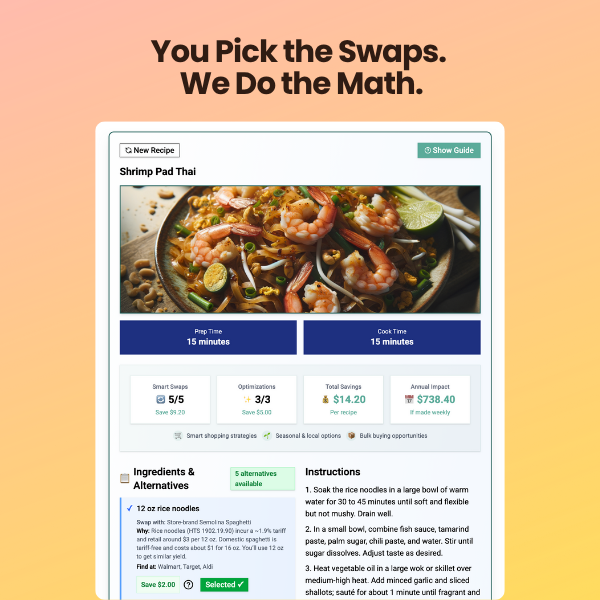
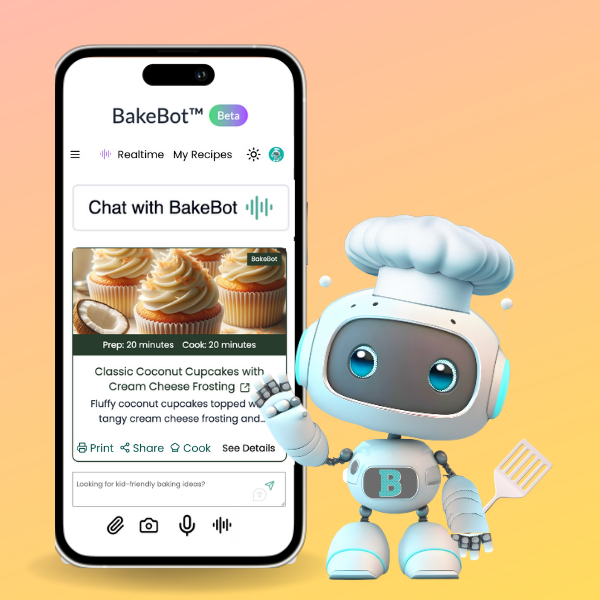
You can also run a suspicious recipe past an AI that actually knows how to cook. Paste the link into our BakeBot and it saves just the recipe, without the 2,000-word origin story about a Tuscan grandmother who never existed, and then you can ask whether the ratios make sense, whether that bake time sounds right, or what’s likely to go wrong before you waste a pound of butter finding out.
Built With Home Cooks, Not Instead of Them
I’m aware of the irony of an AI kitchen assistant founder warning you about AI. But I’ve spent the last few years building AI for home cooks (BakeBot was honored at the Webby Awards for using AI to bring people together around food), and what makes me sad about these sites is how completely they miss the point. For the first time in the history of cooking, someone standing over a bowl of batter that looks wrong can ask a question and get a real answer right then, without waiting days for a reply in the comments or calling her mother mid-recipe. That’s what AI is supposed to do in a kitchen. It should make you a more confident cook, remember what you changed last time, rescue the recipe card with the faded ingredient, and tell you it’s fine to use the yogurt. These operators had the same technology in their hands and used it to manufacture more recipes nobody can ask a question about, attached to people who aren’t there to answer. The home cook who trusts Elena’s chocolate cake ends up alone in her kitchen with a sunken cake and nobody to call, which is exactly the kind of loneliness this technology could have solved.
Technology isn’t the Villain
The technology isn’t the villain in this story. The fake person is, and sometimes the fake person is wearing a real one’s apron. One site in the report took a newspaper photo of a real baker in Greenport, New York, holding her key lime pie, and swapped in an AI face while keeping everything else, right down to the pie. That one stung. BakeBot actually started on Pinterest, the same Pinterest now crowded with fake Elenas, where I noticed people asking questions in the comments of BakeSpace’s pins as if the cook who shared the recipe would be right there to answer. My developers told me not to build it because people wanted star ratings and reviews. I thought they wanted what BakeSpace members have wanted since day one, which is company in the kitchen.
That’s why BakeBot is rooted in real recipes from real home cooks. We first built it right into every recipe on BakeSpace.com, the community I founded in 2006 and still run today, where members have shared more than 130,000 recipes, and as the technology grew, BakeBot got a home of its own at BakeBot.ai. You can search BakeSpace recipes from inside BakeBot, or search the whole web, and import any recipe you find into your own account with the link to the site it came from kept intact, so the real cook behind it never gets lost.
AI on BakeBot was never meant to replace any of those people. It was built to walk with you through the whole kitchen journey: from the idea (snap a photo of your fridge and see what you can make), to modifications (gluten-free, half the sugar, or a family recipe card with an ingredient faded beyond reading), to the grocery store (point your camera at the avocados to find a ripe one, translate a label in the international aisle, or figure out what to make with what’s on sale, then send the recipe to Instacart), to the stove, where it can talk you through each step hands-free so you aren’t smearing flour across your phone. Every version you make gets saved, so your changes become part of the recipe’s story instead of disappearing. That goes for recipes you bring in from anywhere else, too, whether it’s a link, a photo, a PDF, a screenshot, a block of text or a stained recipe card. You get the recipe to modify and pull up whenever you want, minus the long personal story, and the cook who created it is still one click away when you want to go back and see what else she’s been making. When I tested BakeBot by claiming I had no butter, it walked me into a batch of butter-free cookies, and building it is honestly what finally taught me to cook. (I launched a food social network without knowing how, which tells you how much I believed in the people.)
Meet the Cook First
So the next time a gorgeous recipe floats past you on Pinterest, take thirty seconds to meet the cook. If she has the face of a movie star, a team of six identical chefs, and no memory of ever burning anything, keep scrolling. The real cooks are out there, still posting, still answering questions in the comments, still hoping you’ll tell them how it turned out.