
BakeSpace Turns 20. If I Could Go Back to Launch Day, This Is What I'd Tell Myself.
Babette PepajAugust 22, 2006. You're in the second bedroom with a shared hosting account, no tech experience, and no ability to cook, and you're about to launch the world's first food-themed social network.
I have some notes.
Start with the software. You built a recipe site on an off-the-shelf package designed for classified listings, the kind of thing people use to run Craigslist knockoffs. Ingredients are listing attributes. Instructions are the description field. You are quietly terrified somebody will notice. Nobody notices. For years the first food social network on the internet is a used couch marketplace in a wig, and it works fine.
Also you can't cook. You're launching a website for cooks anyway, which is a bit like opening a water park when you can't swim. Nobody checks. Keep going.
On Friday you'll open the New York Times and find out Chow.com launches Wednesday, with money, a team, and people who know what a server is, which is one more of those than you have. You'll look at the guy you're dating and say: if we can't be better, we can be first. We're launching Tuesday.
Do it. Don't think about it too hard. When reporters write up the trend that Chow's launch paid to create, you'll be in it, because a trend needs two companies and you'll be the only other one standing there. You'll call this luck for years. It isn't luck. It's scrappy and it's clever and it's a decision you'll make in about eleven seconds, and that particular reflex is what puts a woman with no tech experience into internet history. Trust it. You're going to need it again.
About three weeks in you'll open the homepage and every photo on it will be a bride. Not a few. All of them. You will genuinely wonder whether you launched a wedding site by mistake. Someone posted about you in the forums at TheNest and several hundred newly married women have shown up wanting to learn to cook for two. Leave it alone.
Not long after, someone will post in the Taste of Home forums and the real cooks arrive, women who have been baking since before you were born and who have firm, unsolicited, completely correct opinions about your pie crust. They'll start teaching the brides. You did not plan this and could not have. Your whole job from here is to not get in the way of it, and you'll mostly manage, which counts for something.
Early on you'll send members their own business cards. Real printed ones, a hundred at a time, with their BakeSpace URL on them, so they can hand one over to whoever asks where they got the recipe. You'll send BakeSpace holiday cards too, themed, every year, to people you've mostly never met. It costs money you don't have and no spreadsheet will ever justify a penny of it.

Years from now you'll find a batch in a drawer and laugh out loud. Then you'll stop laughing, because those cards are a good part of why this place has a heart. Keep doing things like that. Don't let anybody talk you out of them.
About a year in you'll want to run ads and find out you can't afford a developer to build the ad units, which turns out to be one of the luckiest things that ever happens to you. Instead of ads you'll invent branded recipes. Members befriend a brand, and that brand's recipes come to them. No banners, no interruption, just recipes turning up where somebody actually wanted them. Best decision you ever make. It keeps paying you back for the better part of two decades.
You're going to hire a lot of designers. Most of them are wonderful. You'll cringe at the term "persona" for years. One of them will hand you a homepage with body text in a gray so light it's basically a suggestion, and your older members will write in, repeatedly and very kindly, to tell you they can't read it. You won't understand what they're talking about, because you're in your twenties with excellent eyes and you think the page looks clean and modern. Believe them anyway. You'll need this information personally in about fifteen years, care of a pair of reading glasses that lives on your kitchen counter.
At some point you'll go vegetarian and your husband will tell you, with real urgency, not to mention it to the members. Not once, not in passing, not as a fun little aside. He's right. It's annoying.
Scripps is going to invite you to lunch. It'll be a lovely lunch. You'll talk about the community, they'll ask good questions, everybody will be friendly, and you'll drive home thrilled that a major media company finds you interesting. It's not lunch. Scripps is shopping for a user-generated recipe site to buy. They buy Recipezaar... for $25 million dollars.
Later an investor will have you over and you'll barely be in the chair before he asks what you think about Food52. That's also not a meeting about you. (They went on to raise $176M.)
You're going to sit in a lot of rooms where the real conversation is happening a few inches to the left of the one you're having. Showing up isn't the whole job. You have to know what you showed up for, and for a good stretch there, you won't.
Six years in you'll be in the shower when the next big idea one shows up, because that's where you get your best ideas and there is nothing to be done about it. Cookbooks should be searchable. Somebody buys a cookbook, they should be able to type "lemon" and get the lemon thing, instead of scrolling a PDF like it's 1996.
So you'll build Cookbook Cafe, the first interactive cookbook platform where anyone can publish and sell a cookbook, and where every recipe inside the ones people buy is findable with a search box. You'll also build an app for it and you'll learn the hard lesson about keeping tech updated.
Those branded recipes from year one will grow up here into branded cookbooks built around movies and TV shows, and those will put you in the news. Your Love Island fan cookbook will pass a million downloads. Years later you'll start noticing cookbooks built around TV shows everywhere, and you'll let yourself hope you had a little something to do with that. And you'll get emails from members saying they've never seen the show, have no plans to see the show, but the recipe is excellent. That's when you'll know it worked.
Then you'll go to a party and meet a woman who spent thousands of dollars publishing and printing a community cookbook, the kind a church or a school puts together, and you'll stand there doing quiet math about how many of those exist and how much of that money went straight to a printer. That's where your community cookbook feature come from, where you invite other people to drop recipes into yours while you're still putting it together. A party. Most of the good ones come from a party.
Bloggers will start showing up on BakeSpace too, in real numbers, and you'll meet Nichelle from Cupcakes Take the Cake at SXSW in Austin and decide, out loud, to launch a food blogger conference called TECHmunch in New York two months later. Two months. You will not have a venue, a sponsor, or a single good reason. Another SXSW friend will date someone who runs events at the Roger Smith Hotel and the rest is history. It's going to be one of the best things you ever do, and you'll keep doing it for ten years (and meet over 16K food creators).
You'll produce Cupcake Camp LA, which turns into BakeCamp, because it turns out that once you start getting people who love food into a room together, it's very hard to stop.
You'll also start the first live food talk show on Google Plus called KitchenParty, a sentence that's going to need a fair amount of explaining fifteen years from now. You'll co-host it with Jeff Houck, former food editor at the Tampa Tribune, and Rene Lynch, former food editor at the LA Times, and it'll grow to a million subscribers. Nadia G, Fabio Viviani, Brian Malarkey, Floyd Cardoz, and most of the biggest food creators working will sit down and talk with you. Google Plus won't survive. The people you meet doing it will.
One more thing about all of this, and you may want to sit down. You were a painfully shy kid. You're now going to spend twenty years on stages, running conferences, interviewing chefs, talking to rooms full of strangers about food. You're going to have the time of your life.
Two of your members, DeeDee and Michelle, will organize a BakeSpace meetup entirely on their own. Nobody at the company asks them to. You'll make it to one while you're in New York, and DeeDee will have baked a cake for it. Custom. For a website.

Sit with that a second. Somebody baked a cake for a website.
When you finally build real recipe templates, fifty thousand recipes will be stranded in the old listing format with no clever way to move them. About a dozen members will volunteer and do it by hand, one recipe at a time, for no reason except that they want the place to work. Nobody pays them. Nobody has to ask twice. Twenty years from now that's still the thing you think about most. Cry about it while it's happening instead of saving it for later.
You're going to get a lot of press and on your biggest press push, you're going to have a server crash and lose 5,000 new member profiles. Do not panic. You will think of how to spin this in your favor.
You're also going to spend twenty years fighting spam. There are people who will pay actual money on Facebook for the privilege of dumping garbage onto sites like yours, which is a sentence you have no way of understanding in 2006. You'll end up part community manager, part police, and some weeks a great deal more of the second one than you'd like. Do not let them win. It's tedious, nobody thanks you for it, and it's the reason the place stays safe enough for people to be honest in. You'll add "Flag recipe" to your recipes so other's can help you with this. You got this!
About the weekends. You're going to give up a lot of them, and a lot of nights, getting back to members as fast as you possibly can, because it matters to you that somebody who asks a question at eleven at night isn't left sitting there. You'll also end up marrying the guy you looked at on that Friday and prepped for Tuesday's launch. He'll spend the next twenty years reminding you of all the evenings you spent in that spare room instead of going out. You won't regret a single one of them.
Now the part you'll want to skip, but don't.
You're going to burn out. Not on the site, on the customer service, on being the person who answers every member every day for years, and one day you'll just stop logging in. There's no decision. You don't announce anything. You're busy, you're tired, you tell yourself it's running fine without you, and a few months go by.
When you come back, some of your most active members will have talked each other into moving the conversation to Facebook. You were the answer to MySpace and now Facebook is the answer to you. Nobody is angry. That's the part that stays with you. No exodus, no complaint thread, no goodbye. There's a conversation happening and you're not in it, so it drifts to wherever it's easier to have. You don't lose them, by the way. You're still friends with these women twenty years later. Facebook memories still surface of all of you together at the Pillsbury Bake-Off, and you smile every single time one does. What moved wasn't the people. It was the room, and you weren't in it.

Nothing breaks. Everything breaks. No number turns red the day it starts. A dashboard would have looked completely normal that entire month, because a dashboard tells you what people did and never once what they're about to stop doing. Absence is a decision. It just doesn't come with a start date.
Everything good after that comes from being back in the room.
Those interactive cookbooks will come back for you ten years later, when you build the first interactive cooking show. You'll get an agent, Seth at ICM, whose father repped you back when you worked in television, which is the sort of full circle nobody can plan.
Then you go pitch. Magical Elves. Alfred Street. Tastemade. The people behind The Biggest Loser. And in room after room you'll discover that everyone has been trying to crack an interactive food show, and every one of them sits across the table and asks you the same question. How did you solve this? Do you know what it's like to have the best in the business look at you with warm eyes and welcome you into their world, but praise you for your clever format? It's like winning the lottery twice in one day. You'll think every moment of your life has brought you to this moment. That's where your old TV life stops feeling like a previous career and starts feeling like preparation.
You'll pitch Food Network, Amazon, even Animal Plant... and the day before your Quibi pitch, you'll get the news they are closing down. On a call with Netflix you'll hear the development exec say they're open to any show except food, which is a sentence you will be repeating at parties for the rest of your life. Two production companies will option your shows, and while you sit out a year-long contract waiting for it to lapse, you'll develop dozens more and end up in creative places you never got anywhere near in all your years in television.
There will be a pandemic. Add bread recipes to the site now.
None of that happens without a shower and a thought about searchable cookbooks.
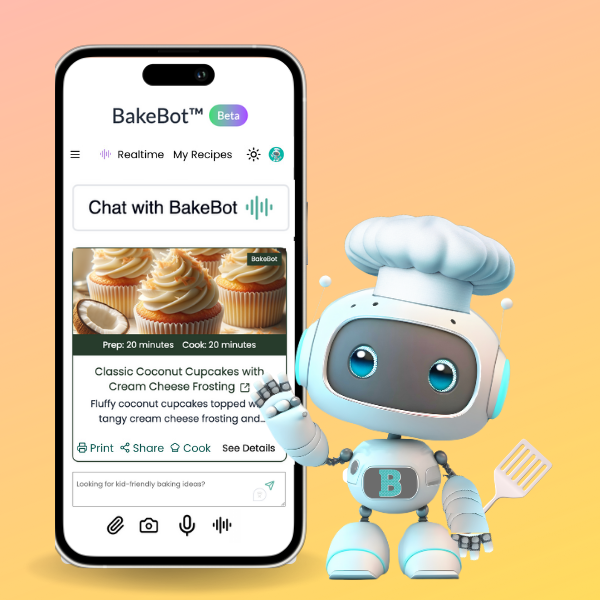
There will be something new called AI. You'll spend a long stretch trying to get your developers to take AI seriously, with mixed results, and then one day you'll be reading Pinterest comments on recipes you posted and it'll land. Why can't people just talk to the recipe? Ask it things, right there, in the moment, standing in the kitchen with a bowl in one hand? Because those questions mostly just sit there. Not because anybody's ignoring them. The person who posted that recipe is a home cook with a life, and she'll circle back eventually, just nowhere near the speed the internet moves. Meanwhile somebody is standing in her own kitchen with the oven already hot, trying to work out whether this banana cake recipe genuinely has no bananas in it or whether the poster forgot to type them. They want to know if they can swap the buttermilk. They want to know right now.
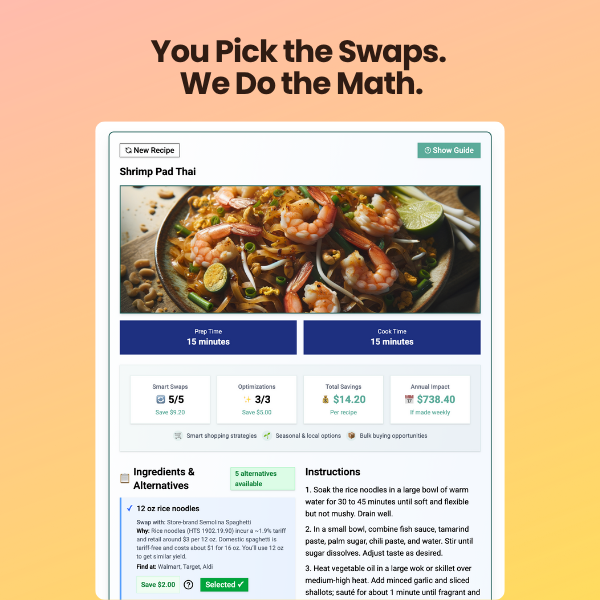
Nobody is there in that moment. You'll build BakeBot because you can't stand it, and because by then you'll know exactly what it feels like to be the one who didn't answer in time. First you'll added it to BakeSpace and then you'll get really bold and give it's own home at BakeBot.ai and take on a technical co-founder. Together you'll even try to solve the cost of groceries with SmartSwap.
It'll have voice and vision, and you'll build it for the person alone in the kitchen at nine at night and the person standing in a grocery aisle trying to remember what a shallot looks like. And after twenty years of running a food company you could not cook for, the thing you built is what finally teaches you how. You'll test it by lying about what's in your pantry to see how far it can stretch a recipe, which is how your husband comes home one night to a plate of cookies made without butter. That story goes somewhere else.
You'll get nominated for a Webby Award. Then another one. Eventually twenty honors and nominations will pile up, which for a site that started as classified ad software in a spare bedroom is a genuinely ridiculous outcome. You'll get to a point you won't even open them when they arrive. One year you'll lose "Best Community" to Twitter. Twitter (which will be called X by now). You'll keep going back anyway, and that stubbornness is the same reflex that had you launching on a Tuesday to get ahead of Chow. It's what keeps this place standing after most of the people who outspent you are gone.
Twenty years from now you'll wake up to more recipes than you could ever imagine, but it won't be your site anymore... it will be their site. Somebody's grandmother's rugelach, typed in by a woman who wanted it to outlive the index card it was written on, still sitting there, still findable, still getting made on a Sunday afternoon by someone that grandmother never met.
That's the job. It means as much on day one as it does two decades in, and there is not much work you can say that about.
You're not going to listen to a word of this, by the way. You'll launch on Tuesday, hire the designer, take the lunch, and learn every bit of it the slow way.
Good. Go do that.
But seriously. The font.