
Your Cookie Legacy: What We Lose When the Baker Dies
Babette PepajShare
Building a Baking Archive Worth Inheriting
Your grandmother's cookie recipe is going to die with you.
Not might. Will.
Unless you do something about it right now, the version of those cookies that tastes right, the one that makes people close their eyes and remember childhood, that recipe is gone the day you are.
I know this because I've watched it happen thousands of times over 19 years of running BakeSpace.com. Someone's mother dies. They find the recipe card. They make the cookies exactly as written. And they taste wrong. Not bad. Just wrong. Missing something essential that was never written down because grandma assumed you already knew.
And there's no getting it back.
The person who knew is dead. The knowledge is gone. And now you're standing in your kitchen with flour on your hands and tears on your face, trying to recreate a memory you can taste but can't capture.
This is what haunts me. This is what keeps me up at night.
Not my own mortality. The mortality of recipes. [Too dramatic?]
The Recipe Card Is a Lie
Here's the truth nobody wants to hear: that precious recipe card in your grandmother's handwriting is incomplete. It was always incomplete. It was never meant to be the whole recipe.
It's a reminder for someone who already knows how to make it.
It says "cream butter and sugar." It doesn't say how long, or what "creamed" actually looks like, or that you need to scrape down the bowl twice, or that the mixture should look almost white and fluffy like frosting before you're done.
It says "bake until done." Done according to whom? Your grandmother's oven that ran 25 degrees hot? Your oven that's perfectly calibrated? What does done look like? Smell like? How do you know?
It says "add flour slowly." How slowly? All at once is slow compared to one grain at a time. What are we actually talking about here?
Every recipe card is full of these landmines. Instructions that make perfect sense if you already know what you're doing and are completely useless if you don't.
Your grandmother didn't write a bad recipe. She wrote the only kind of recipe people wrote back then. A reminder for herself. Notes for someone who was standing next to her in the kitchen, watching her hands, learning by doing.
She assumed you'd be there. She assumed you'd learn by making them together. She assumed you'd ask questions and she'd show you and eventually you'd just know.
She didn't account for the fact that someday you'd be alone in your kitchen with just this card, trying to resurrect something that's already gone.
What Actually Disappears
When the baker dies, we don't just lose a person. We lose an entire database of knowledge that was never backed up.
We lose the way she could tell the dough was ready by touch. The specific motion she used to roll cookies. The exact shade of golden brown she was aiming for. The adjustment she made because her oven ran hot. The extra teaspoon of vanilla she always added. The reason she chilled the dough even though the recipe didn't call for it.
We lose 40 years of small failures and corrections. The time she forgot the baking soda and learned what happens. The time she overbaked them and learned what too far looks like. The time she tried a different brand of butter and it didn't work the same way. All of that accumulated wisdom, gone.
We lose the stories. Why these cookies mattered. Who they were for. What occasions required them. The year everyone got food poisoning from something else at the party and blamed her cookies and she never quite forgave them. The time her grandson ate 12 of them and threw up and she laughed about it for 20 years.
We lose the context that made the recipe make sense.
And we're left with a list of ingredients and some vague instructions and the sinking feeling that we're missing something crucial.
I'm Tired of Watching This Happen
After 19 years of running BakeSpace, I've seen this exact story play out so many times I could script it.
Someone posts: "Looking for help with my grandmother's cookie recipe. I'm making them exactly as written but they're not right. Can anyone tell me what I'm doing wrong?"
They post a photo of the recipe card. Beautiful handwriting. Stained with use. Precious and irreplaceable.
And completely inadequate.
The BakeSpace community tries to help. People offer suggestions. "Maybe try chilling the dough." "Your oven might run hot." "Did she use salted or unsalted butter?" We troubleshoot. We problem-solve. We try to reverse-engineer what the grandmother knew but didn't write down.
Sometimes we get it right. Sometimes we get close enough that the person is satisfied.
But we never really recover what was lost. We can't. Because the person who knew is gone, and no amount of collective wisdom from strangers on the internet can fully replace the knowledge that lived in her hands.
This makes me furious.
Not at the grandmothers. Not at anyone. Just at the situation. At the fact that we keep losing this knowledge, generation after generation, because we don't document it properly while we still can.
The Work You're Avoiding
You know you should write down your recipes properly. You know it. You've thought about it. You've meant to do it. You know your grandma's recipe box is just sitting there... filled with cards, lots of handwritten cards (some are missing whole sections). You plan on scanning them in ... one day.
You haven't done it.
Because it feels overwhelming. Because you don't know where to start. Because you're busy. Because you'll get to it later. Because surely someone already knows how to make these, right? Because you're not that old yet, you still have time.
You don't have as much time as you think.
And the work isn't optional. It's urgent.
Right now, today, you have knowledge that's going to disappear. You know things about your family recipes that nobody else knows. You've made adjustments that work. You've learned through failure what matters and what doesn't. You can tell by touch when something's right.
All of that is in your head, that recipe box, that old binder filled with recipe clippings. And when you're gone, it's gone.
Unless you write it down. Properly. Completely. With the kind of detail that feels excessive but isn't.
This is the work: documenting not just ingredients and steps, but everything around them. The context. The sensory cues. The failures you've learned from. The adjustments you've made. The stories that make the recipe matter.
Writing recipes like you're writing them for a stranger who's never been in your kitchen. Who doesn't know what your oven is like or what "done" looks like to you or why you always add extra vanilla.
Writing recipes with enough detail that someone could actually succeed on their first try.
This feels like too much work. It is a lot of work.
But it's the only way to actually preserve what you know.
What I'm Actually Building
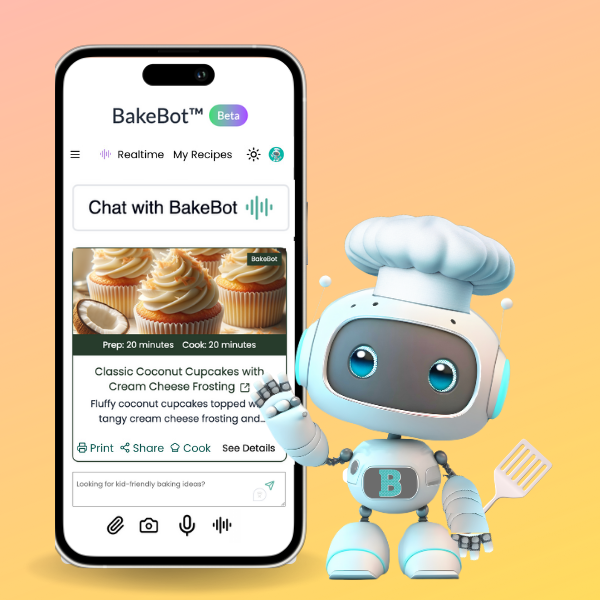
I didn't build BakeBot (on BakeSpace.com & BakeBot.ai) because I thought the world needed another app. I built it because I was tired of watching people lose their family recipes to preventable causes.
Faded handwriting on old recipe cards. That's preventable. We have technology that can read handwriting now, even when it's barely legible.We can preserve these physical artifacts while also making them usable.
Missing context and incomplete instructions. That's preventable. We build a tool that prompts you to add the knowledge you don't realize you have. That ask the right questions. That help you document not just what to do, but why and how and what success looks like.
Lost recipes because the website shut down or the blog disappeared. That's preventable. We can build systems where you own your data, where your recipes don't disappear when a platform dies.
I built BakeSpace 19 years ago to help people share recipes. I'm building BakeBot now to help people preserve them. Actually preserve them. With all the knowledge intact.
Because I'm tired of having the same heartbreaking conversation. I'm tired of watching people lose recipes that mattered. I'm tired of knowledge disappearing when it doesn't have to.
What You Need to Do Right Now
Stop reading this and go find a recipe card. Pick one that matters. One that came from someone you loved, or one that you make that you want someone else to be able to make after you're gone.
Make the cookies. But this time, document everything.
Document every stage. Write down what you're actually doing, not what the recipe card says. Note the adjustments you make automatically. Describe what things should look like, feel like, smell like. Record the stories you remember about these cookies.
Write it all down like you're explaining it to someone who's never done this before. Someone who doesn't have access to you to ask questions. Someone who's going to be alone in their kitchen someday, trying to make your cookies after you're gone.
Be generous with detail. Over-explain. Include the stuff that feels obvious to you, because it won't be obvious to them. If you don't want to write them down, you can always go to BakeBot.ai and talk to or show BakeBot your recipe and have it jot down all the details. You have no excuse.
Do this for one recipe. Then do it for another. Keep going until you've documented the ones that matter most.
Your recipes are going to die with you unless you do something about it.
So do something about it.
Now.
And yes, that recipe in the banner is my grandmother Geraldine's recipe.
Babette Pepaj is the founder of BakeSpace.com and BakeBot.ai. She's been fighting the preventable loss of family recipes for 19 years, and she's not stopping now.