
Baking in the Age of Everything: Why Cookies Still Matter
Babette PepajShare
We can order dinner from 47 different restaurants without putting on pants. We can get groceries delivered in an hour. There's probably a bakery within a few miles of wherever we are right now that makes cookies so beautiful they look like they should be in a museum, and we could walk in there and buy two dozen without breaking a sweat.
So why are we standing in our kitchens at 11 PM on a Wednesday, covered in flour, making cookies from scratch?
This is a genuine question I've been asking myself for 19 years of running BakeSpace.com. Why are hundreds of thousands (probably millions) of people still doing this? Why, in an era where we can outsource literally everything, are we still creaming butter and sugar by hand? Why are we still rolling out dough and washing mixing bowls and setting timers?
What are we actually doing here?
The Convenience Paradox
We live in the age of everything. We can buy meal kits that come with pre-measured ingredients and idiot-proof instructions. We can get cookies delivered to our door that were made by actual professionals with commercial ovens and training. We can walk into any grocery store and find cookies that are, objectively, pretty good.
For example, I love Levain Bakery. When they opened a shop on Larchmont, I took notice. Their cookies are massive, perfectly imperfect, with that ideal ratio of crispy edges to gooey center. It's the first cookie that became appointment eating every time I'd visit NYC for our annual food blogger conference TECHmunch. It was the first cookie my future husband sat patiently on a park bench with me in Central Park while I ate the whole thing by myself. They're legitimately award-winning, excellent. I could walk in there right now and walk out with cookies that would make anyone happy.
And yet.
Right now, in the middle of December, I'm watching my BakeSpace & BakeBot community explode with activity. Thousands of people sharing recipes, asking questions, posting photos of their successes and their failures. People staying up late to bake. People stressing about cookies. People spending money on ingredients and time on preparation when they could just... not.
The rational part of my brain says this makes no sense. The rest of me knows exactly why we're doing it.
What Buying Can't Get Us
Here's what we can't buy from Levain or any other bakery, no matter how good they are:
We can't buy the fact that we made these with our own hands. That we chose the ingredients. That we decided how much vanilla to add and whether to slightly underbake them because we like them chewy.
We can't buy the smell of cookies baking in our own ovens, filling our own houses, making our own spaces smell like every good December memory we've ever had. My friend Mollie can be in the living room and can smell when the cookies are done (even if the timer hasn't gone off).
We can't buy the version of these cookies that tastes like our grandmother's, because the bakery doesn't have her recipe, her specific way of doing things, her particular ratio of cinnamon to sugar that makes these cookies taste like home.
We can't buy the story. And cookies, it turns out, are mostly story.
The Conversation That Always Happens
I've been deep in the online food world for 19 years. I ran a blogger conference for a decade. I've been to more food events, conferences, and gatherings than I can count.
And here's what happens, without fail, every single time: someone finds out what I do, and suddenly we're talking about food. It doesn't matter where I am. Airport. Doctor's office. Hardware store. Last weekend's IndieWire Honors awards. Someone mentions BakeSpace or finds out I work in food content, and immediately they want to tell me about their grandmother's recipe, or the cookies they're planning to make, or the baking disaster they had last year, or ask if I think they should try macarons.
Every conversation leads to food.
And not just food. It leads to memory. To family. To that one time something went horribly wrong. To the recipe they're afraid to try. To the thing their mother made that they've been trying to recreate for 15 years.
That last one comes up more than you'd think. Someone will pull out their phone and show me a stained recipe card with their grandmother's handwriting, half the ingredients missing or smudged beyond recognition, and ask if I think it's possible to figure out what it was supposed to be. The heartbreak in that question is real. It's not just about cookies. It's about trying to hold onto someone who's gone, trying to taste that exact memory one more time.
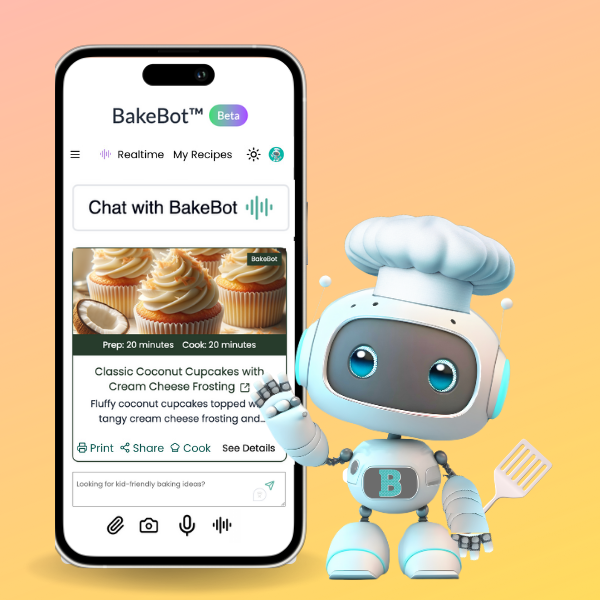
That's actually why I added the ability to read handwritten recipes into BakeBot (both on BakeSpace.com & BakeBot.ai). Not because it's a cool tech feature, but because I got tired of hearing that particular sadness in people's voices. If there's a way to help someone recreate their mother's cookies from a half-legible index card, that feels worth doing.
People don't want to talk to me about food because they're hungry. They want to talk about food because food is how we talk about everything else. Love. Loss. Home. Identity. The person we used to be. The person we're trying to become.
Cookies are just the entry point into all of that.
The Last Stand of Handmade
A friend of mine works in tech. She designs apps that automate things. She's brilliant at making life more efficient, more streamlined, more convenient.
And she bakes bread every Sunday.
When I asked her why, she said something that stuck with me: "I spend all week making things easier for people. On Sunday, I want to make something hard. I want to use my hands. I want something that takes time and attention and can't be rushed. I want to fail sometimes. I want to feel like I actually made something real."
That's what cookies are now. They're one of the last things we haven't completely outsourced. One of the last inefficient, inconvenient, hands-on things we still insist on doing ourselves.
In a world where everything can be purchased, delivered, and automated, making cookies from scratch is almost rebellious.
What We're Really Making
After watching the BakeSpace community for nearly two decades, I've realized something: when people bake cookies, they're not really making cookies.
They're making memories. They're making tradition. They're making connection.
They're making the thing their grandmother made, keeping alive something that would otherwise be lost. They're making the recipe they found online that one year, that's now "their" Christmas cookie, that their kids or nieces or neighbors will someday remember as the taste of that time, that place, that person.
They're making something to give away, which is just another way of saying "I thought of you enough to spend my time on you."
They're making a mess in their kitchen, which is just another way of saying "this space is lived in, this home is used, we do things here."
They're making mistakes and learning from them, which is increasingly rare in a world where everything is designed to be foolproof.
The cookies are almost beside the point. The cookies are just what we get at the end of the actual thing we're making, which is the experience of having made them.
The Failure Factor
Here's something else we can't buy: the possibility of failure.
When we buy cookies from a bakery, they're going to be good. That's their job. They're professionals. We're paying for reliability.
When we make cookies ourselves, they might be good. They might be great. They might also be burnt, or underbaked, or weirdly flat, or taste like we accidentally used salt instead of sugar.
And weirdly, that matters.
Because when they turn out good, when we pull them out of the oven and they're actually beautiful and they taste right, we feel something. Pride, maybe. Accomplishment. The specific satisfaction of having done something that could have gone wrong but didn't.
We made something. And it's good. And we did that. Just look at any child who bakes cookies and realizes they taste delicious.
We can't buy that feeling. We can only earn it.
The Inefficiency Is the Point
Here's the thing about baking cookies: you can't really do it while doing something else.
You can't scroll through your phone while creaming butter and sugar. You can't take a work call while rolling out dough. You have to actually be there, in your kitchen, paying attention, using your hands.
In a life that's increasingly lived through screens, on schedules, optimized for every possible efficiency, cookies refuse to cooperate with that. They take the time they take. They require the attention they require. The mess happens whether you like it or not.
And maybe that's not something to fix. Maybe that's the entire appeal.
When I was building BakeBot (our AI Kitchen Assistant) this year, I kept coming back to this question: what parts of baking actually need help? Because the mixing and the measuring and the waiting for things to bake, that's not the problem. That's actually the good part. That's the part where you're present, where you're doing something with your hands, where you're making something real.
The problem is everything else. Remembering what you made last year. Figuring out which cookies you can make ahead. Tracking down that recipe you saw six months ago. Managing the sheer logistics of trying to bake seven different things in three weeks while also having a job and a life. Making your favorite cookies vegan or gluten-free because now your guests need that. Realizing you don't have butter after you've already started to make your cookies, and you need a substitute now.
That's the stuff that makes people give up and just buy cookies instead. Not because they don't want to bake, but because the organizational chaos around baking feels impossible.
Why This Won't Go Away
People keep predicting that cooking will die out. That we'll all just eat prepared food and meal kits and eventually some kind of nutrient paste delivered by robots.
But I don't think so.
Because cooking, and especially baking, isn't primarily about food. It's about being human. It's about making things with our hands, about caring for people, about carrying forward traditions, about creating experiences that can't be packaged or delivered or automated.
We can make almost everything in modern life more convenient. But we can't make homemade cookies more convenient than buying them without losing the entire reason people make them in the first place.
The inconvenience is the thing we're actually choosing. The time and attention and effort, that's what makes them mean something.
What the Numbers Don't Show
In the 19 years I've been running BakeSpace, I've seen the data. I know how many recipes get shared. How many comments get posted. How many people search for "easy Christmas cookies" versus "impressive Christmas cookies" versus "grandma's Christmas cookies."
But the numbers don't tell you what I hear in every conversation. What I see in every comment thread. What shows up in every message from someone who's just found their grandmother's recipe card and wants to know if anyone else has made this exact cookie.
The numbers don't show you that people are searching for something bigger than cookies. They're searching for connection. For continuity. For the feeling that they're part of something that matters, something that's been happening in kitchens for generations and will keep happening long after we're gone.
They're searching for a way to slow down in a world that won't stop speeding up.
They're searching for something real to do with their hands.
They're searching for a way to say "I love you" that isn't just words.
That's why we're still doing this.
That's why, despite all the convenience and automation and efficiency available to us, we're still choosing the inefficient, inconvenient, hands-on option.
Because some things shouldn't be convenient.
Some things should take time and attention and effort.
Some things should be made with our own hands, in our own kitchens, because we decided they mattered enough to make them ourselves.
Cookies are one of those things.